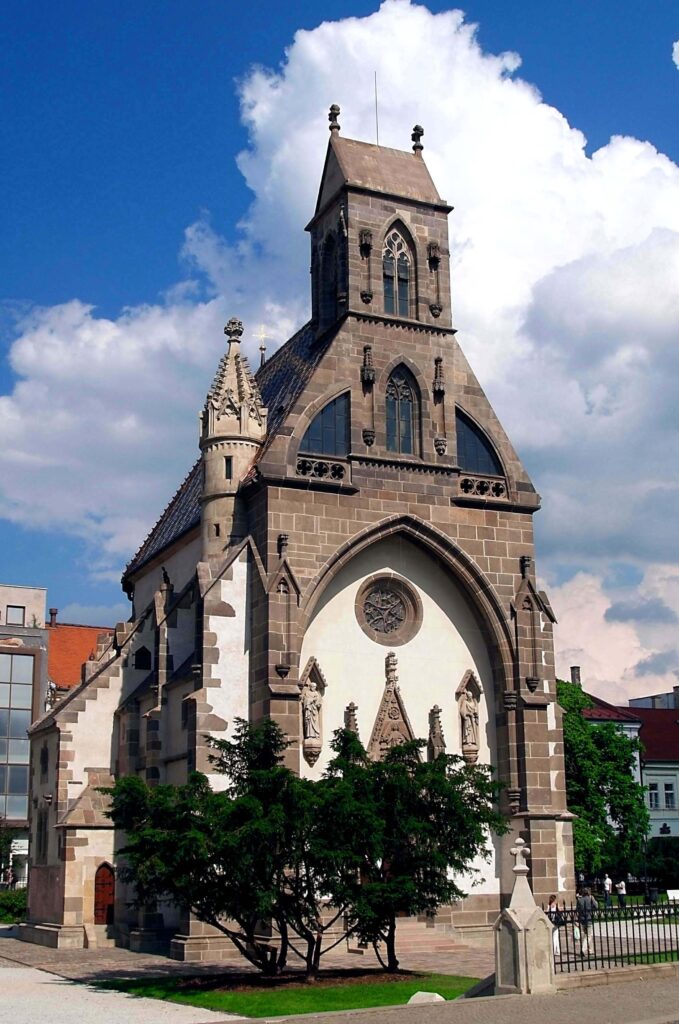
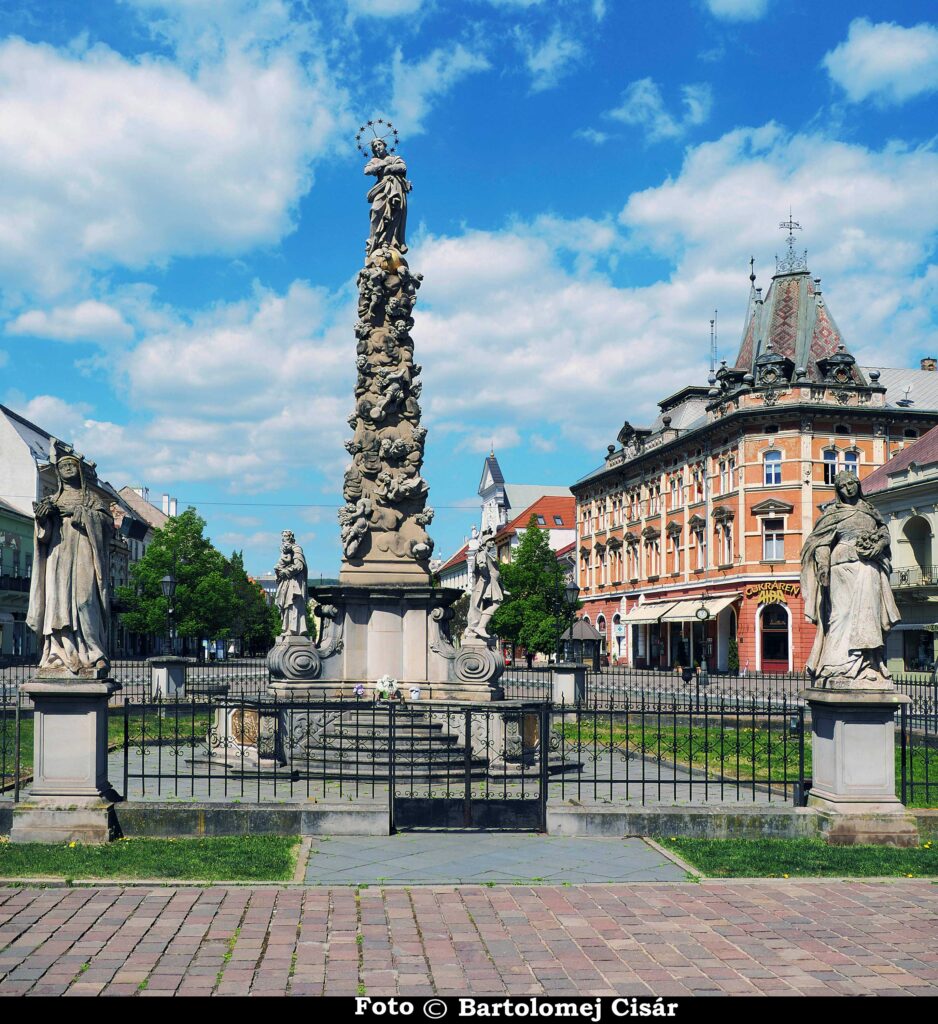
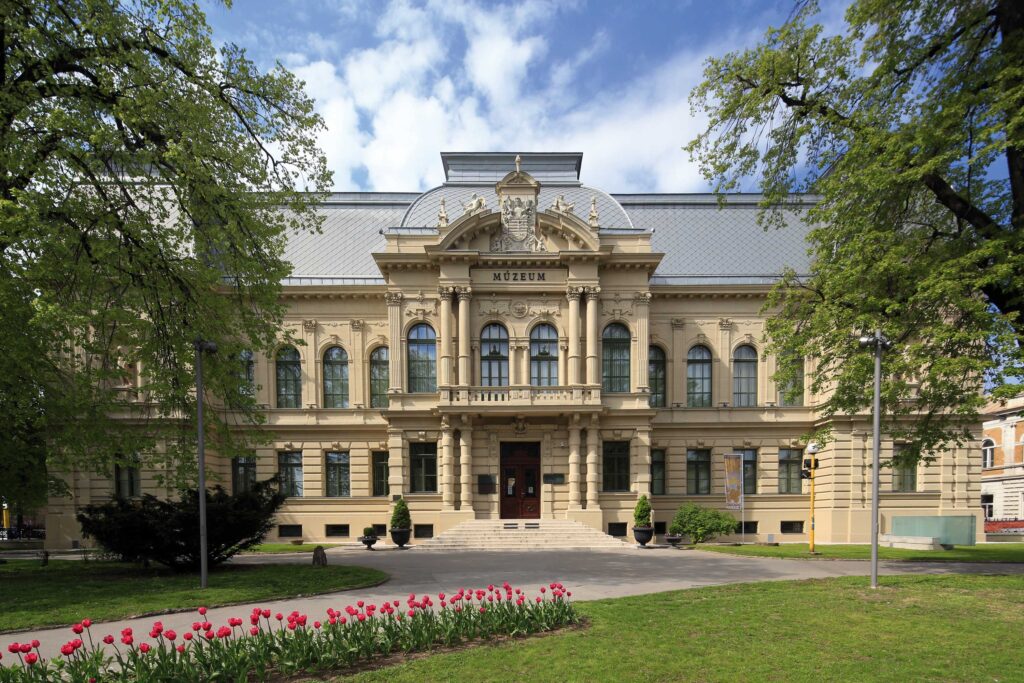
see also: Dear visitors, welcome to eastern Slovakia.
A Journey through Time and Sacral Architecture
Churches are the places where the faithful meet God, and in a sense it helps and aids all believing to experience the faithful who have always designed sacred buildings with great care and great love. Master craftsmen and folk expressed faith through architecture, art, and craftsmanship. Across centuries, sacred buildings in Slovakia were created with remarkable care and devotion, reflecting both religious identity and cultural diversity.
Slovakia is the country of remarkable religious diversity. The majority of the population is Roman Catholic (55.8%), followed by Greek Catholics (4.0%), Evangelicals of the Augsburg Confession (5.3%), Reformed Christians (1.6%), Orthodox Christians (0.9%), and a small Jewish community. For centuries, these communities lived side by side, shaping not only religious life but also architecture, language, and visual culture.
There is nowhere more visible the fact than in Eastern Slovakia, a region renowned for its exceptional wooden sacred architecture. Tey are more than 300 wooden churches standing across the landscape; today, around 50 ones have survived. Built mainly between the 15th and 19th centuries, they reflect Roman Catholic, Greek Catholic, and Protestant traditions. Alongside them, UNESCO-listed monuments such as the Church of the Holy Spirit in Žehra and the Articular Church in Kežmarok demonstrate how architecture evolved under the influence of faith, historical change, and legal restriction. What makes these churches truly extraordinary, however, is their interior. Behind modest wooden exteriors lies a world of intense colour and symbolism: richly carved and painted iconostases, monumental altar structures separating sanctuary and nave, and layers of sacred imagery that transform small rural churches into spiritual microcosms. The Iconostases are filled with icons painted in tempera on wood, following Byzantine tradition and Slavonic inscriptions in the Greek Catholic churches. In Roman Catholic and Lutheran churches, wooden altars and painted galleries often carry German Gothic (Schwabacher) and Latin inscriptions, while some regions preserve rare Hungarian Stations of the Cross. Together, these elements form one of the richest examples of multicultural sacred art in Central Europe.
The Route
Our journey begins in Kežmarok,the locality of one of the most famous Articular wooden churches in Slovakia, built in 1717 and inscribed on the UNESCO World Heritage List. Constructed under strict Habsburg regulations issued in 1681, the Lutheran church had to be built entirely of wood, without nails, stone foundations, belfries or bells, and outside the city walls. Despite these limitations, it became a masterpiece of wooden engineering and religious expression.
The interior is dominated by
a finely crafted wooden ceiling painted with biblical scenes and symbolic ornamentation. Galleries encircle the nave, their panels inscribed in Gothic Schwabacher script. The central altar, created in the 18th century by master craftsman Ján Lerch, reflects the theological clarity of Lutheran tradition, where the Word and image work together in disciplined harmony. The result is a space that feels both restrained and deeply expressive, shaped by faith under constraint (www.ecavkk.sk).
The Kežmarok route leads about 25 kilometers south-east from Kežmarok to Levoča,
a former free royal town and one of the most important centres of Gothic art in Slovakia. The Church of St. James, dating from the 14th century, contains an extraordinary collection of 14 Gothic and Renaissance altars, making it one of the largest ensembles of its kind in Europe. The church’s artistic heart is the monumental high altar created by Master Paul of Levoča between 1508 and 1517 — the tallest wooden Gothic altar in the world.
The altar’s carved figures of Christ, the Virgin Mary, and the apostles reveal an exceptional level of late medieval woodcarving, combining realism with theological symbolism. Originally Roman Catholic, the church was also used by the Evangelical community during the Reformation before returning to Catholic use in the 18th century. It forms part of the UNESCO “Levoča, Spišský Hrad and Associated Cultural Monuments,” inscribed in 1993, and the church has been protected as a national cultural monument since 1950 (www.chramsvjakuba.sk).
Continuing southward, our route reaches Žehra, where the Church of the Holy Spirit stands as one of the most significant Romanesque–Gothic monuments in Central Europe. Dating from the 13th century, its greatest value lies in its extraordinary cycle of medieval frescoes, which cover nearly the entire interior. These paintings depict biblical narratives, saints, and theological themes, forming one of the most complete medieval pictorial programs in the region. The iconographic system transforms the small rural church into a visual Bible, where every wall surface contributes to a continuous narrative of salvation history. The church’s tower, later modified, is crowned by a distinctive onion-shaped wooden dome, blending architectural layers from different centuries.
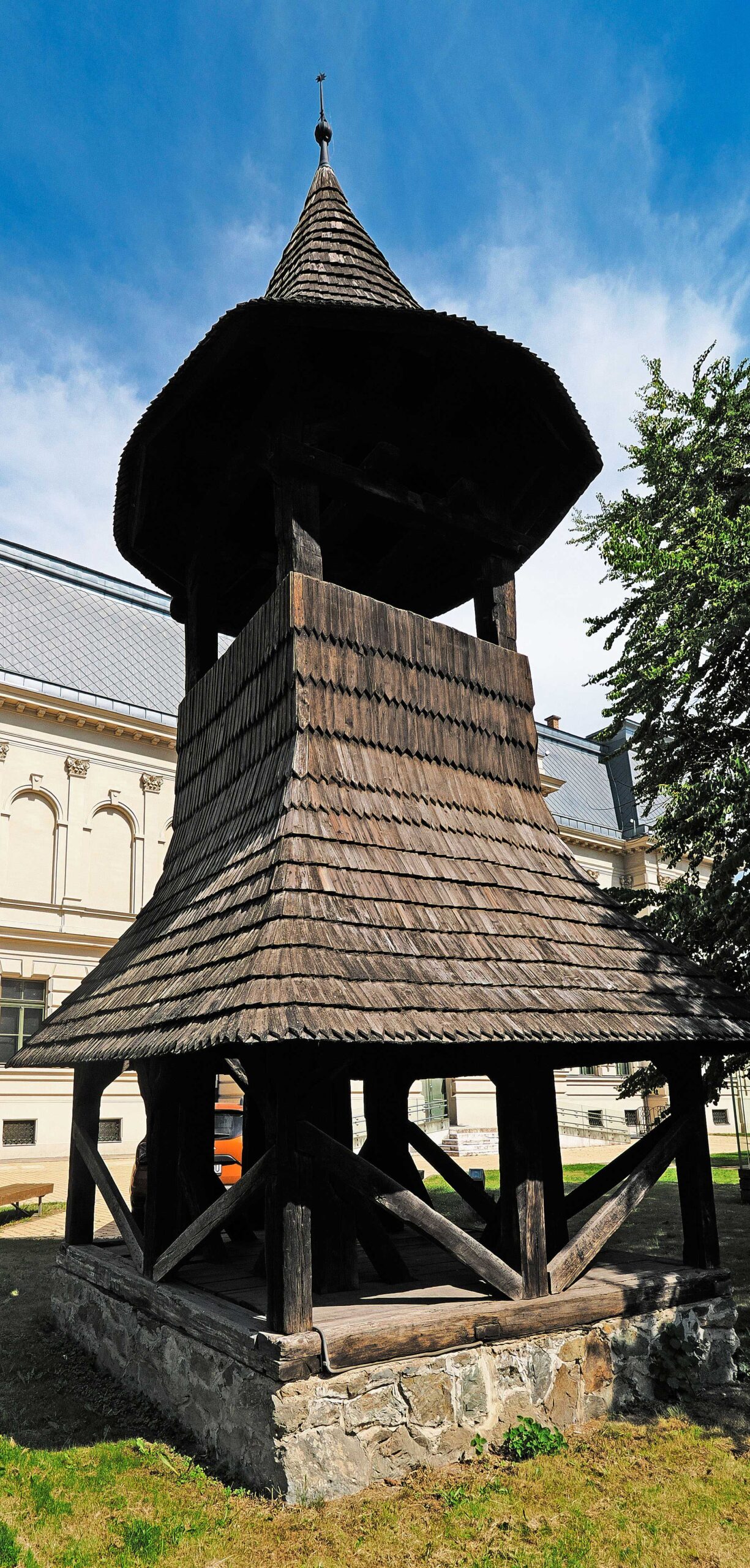
The next stop 45 kilometers south-east from Žehra, is the second biggest city of Slovakia – Košice. The East Slovak Museum preserves a wooden Greek Catholic church relocated from Kožuchovce in 1927, originally built in 1781. This three-part log structure — narthex, nave, and sanctuary — follows traditional Eastern Christian architectural logic. Its most valuable feature is the interior painting cycle from 1785, created by an unknown folk artist. These wall paintings depict scenes from the Old and New Testaments in a vivid, narrative style, combining local artistic expression with Byzantine iconographic tradition. The result is a rare example of popular religious art, where theology is communicated through colour, gesture, and storytelling rather than academic painting techniques. The church was declared a national cultural monument in 1963 (www.vsmuzeum.sk).


The journey continues 20 kilometers northerly to Prešov, the third-largest city in Slovakia and an important centre of Eastern Christianity. The Greek Catholic Cathedral of St. John the Baptist (Hlavná 1) preserves the relics of Blessed Bishops Pavol Peter Gojdič and Vasiľ Hopko, placed in the Chapel of the Holy Cross after their beatification in 2001. The cathedral also contains a copy of the Shroud of Turin, linking local devotion with global Christian heritage (www.katedrala.sk). Nearby stands the Gothic Co-Cathedral of St. Nicholas, whose tower offers panoramic views of the – centre. Inside, the church preserves valuable altars and sculptural works that reflect the long development of Gothic architecture in the region. (https://presov.rimkat.sk/).
About 35 kilometres north-west of Prešov lies Hervartov, the locality of the only Roman Catholic wooden church in Eastern Slovakia inscribed on the UNESCO list. Built in the late 15th century, the Church of St. Francis of Assisi contains rare medieval and Reformation-era wall paintings. These include biblical scenes such as Adam and Eve, accompanied by Latin and Czech inscriptions — a rare combination of visual storytelling and multilingual theological commentary.
Just a short distance away lies Bardejov, one of the best-preserved medieval towns in Slovakia. The Basilica of St. Egidius (14th–16th century) contains a remarkable set of Gothic altars, including works ascribed to Master Paul of Levoča (www.visitbardejov.sk/en/pamiatky/kostoly). The nearby Museum of Icons presents a rich collection of Eastern Christian iconography, offering deeper insight into the symbolic language found in wooden churches across the region (www.muzeumbardejov.sk/expozicie/ikony/).
In the nearby spa area of Bardejovské Kúpele, an open-air museum preserves the Greek Catholic wooden Church of St. Nicholas, originally built in 1706 in Zboj. Its most valuable feature is the richly decorated Baroque–Rococo iconostasis from 1766, considered one of the finest preserved in Slovakia. The multi-tiered imposing edifice is filled with icons of Christ, the Virgin Mary, saints, and feasts, arranged according to strict theological hierarchy.
Fortyfive kilometers north-east northeast lies the Ladomírová village, where the Greek Catholic Church of St. Michael the Archangel (1742) stands as a UNESCO-listed masterpiece of wooden sacral architecture. Built entirely without nails, the church is dominated by a powerful iconostasis filled with icons arranged in hierarchical rows, reflecting the Eastern Christian vision of the heavenly order. The belfry with three bells and the surrounding wooden fence complete the traditional village sacred ensemble. The village itself was heavily damaged during the Carpathian–Dukla Operation in 1944.
One of the oldest wooden churches in Slovakia which is on the UNESCO World Heritage List, the Church of St. Nicholas from 1658, stands, as if out of sight, nearby Bodružal village. Its three-square log structure represents early Ruthenian architectural tradition. Inside, a richly decorated iconostasis and painted interior reflect centuries of continuous liturgical use. Between 1965 and 1995, the church served both Greek Catholic and Orthodox communities, symbolising religious coexistence in the region.
The journey continues approximately 75 km south-east to Humenné, where the open-air museum of the Vihorlatské múzeum preserves the Church of St. Michael the Archangel. Originally built in Nová Sedlica in 1764, the church was relocated in the 1970s to protect it as part of Eastern Carpathian wooden heritage. Its interior is dominated by a multi-tiered iconostasis filled with icons painted according to traditional Greek Catholic iconography, where each register represents a different level of sacred history (www.muzeumhumenne.sk).
The final stop is in Ruská Bystrá, 80 kilometres further east. The Greek Catholic Church of the Transfer of the Relics of St. Nicholas (1730) is the easternmost UNESCO wooden church in Slovakia. Its iconostasis is exceptional for its spatial composition, extending beyond the central wall onto side walls and even the ceiling — creating an immersive sacred environment. The sanctuary contains a rare icon of the Crucifixion, forming the theological and visual climax of the entire journey.
More about Slovak UNESCO World Heritages find you on: https://whc.unesco.org/en/statesparties/sk
by Daniela Capcarová
photo by Bartolomej Cisár