Travel in time through Košice – see the timeless buildings from the 1920s and 1930s.
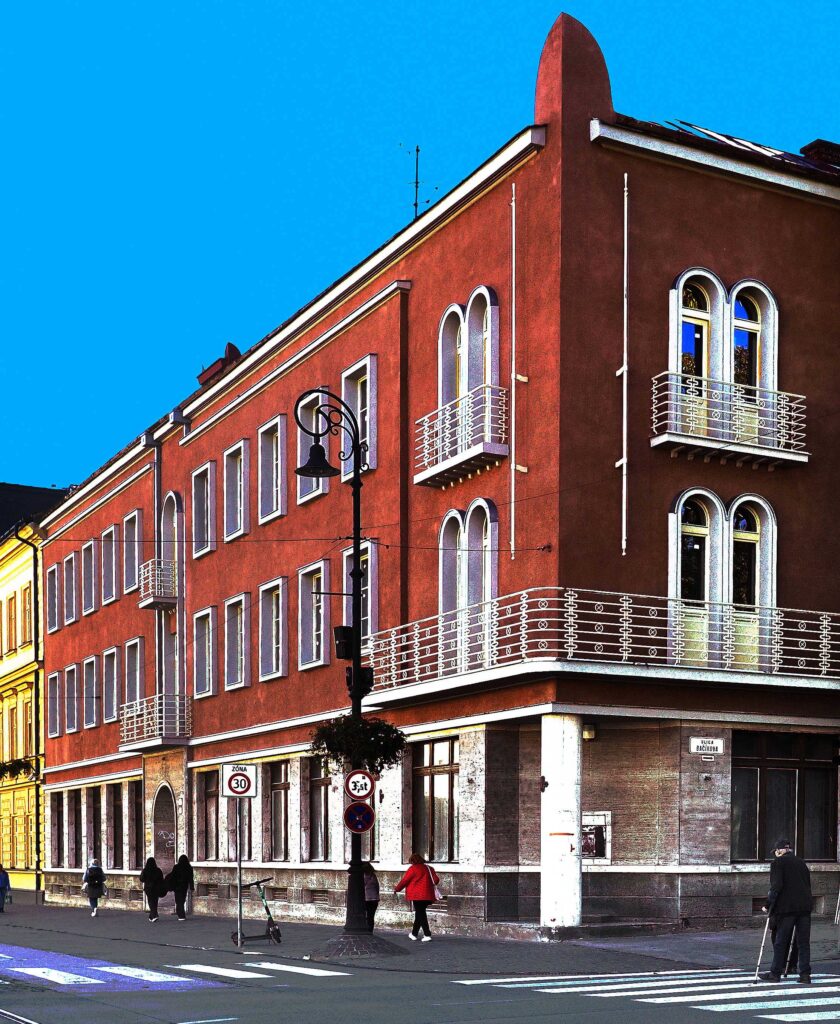
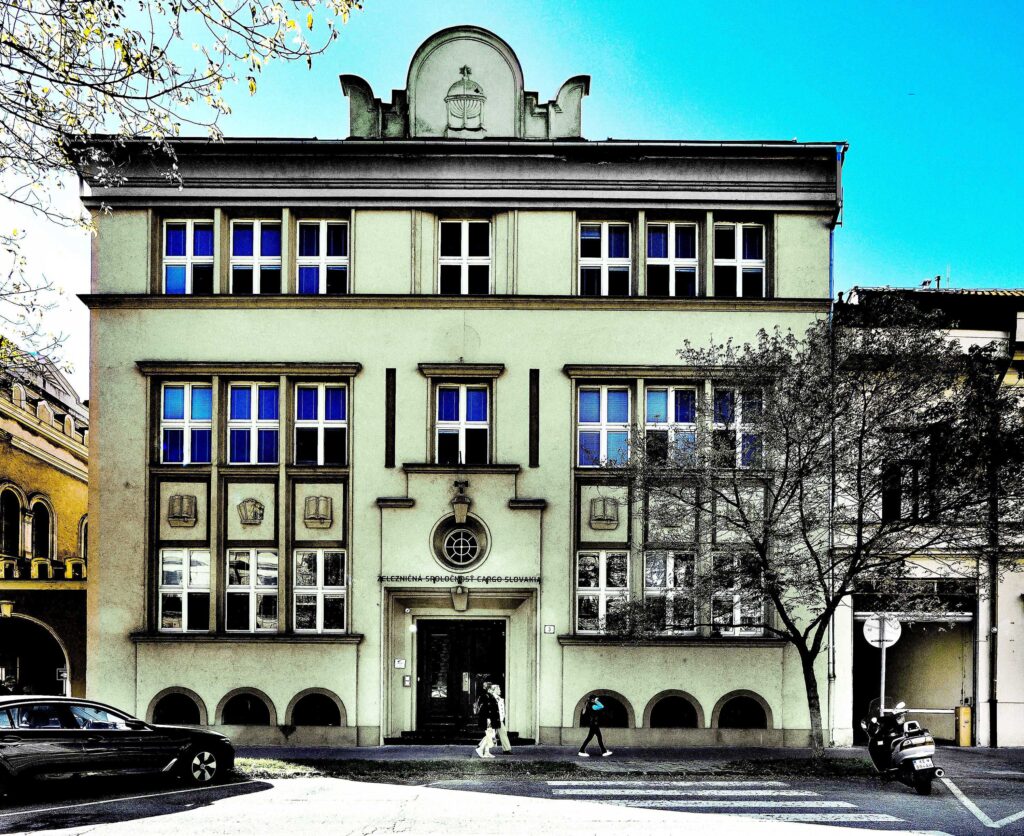
Former building of the
Chamber of Commerce
and Industry
Location:
Corner of Hlavná and
Bačiková Street, Košice
Every single tourist from every corner of the world can be found in the person of the late Ludwig Oelschläger, Why should a visitor, to the metropolis of the East, see his buildings in Košice? The architect was a true cosmopolitan and a versatile person with knowledge of several languages. After graduating from high school in Košice and studying in Budapest, he worked in design offices in Berlin, Munich and Stuttgart, and after World War II he and his family were displaced to Hungary, where he used the name Lajos Őry. Apart from Košice, his eye-catching buildings, as if posing for admiration, are in the east of Slovakia and have also been built in Uzhhorod and Mukachevo in Ukraine and in Hungary. Oelschläger’s works are also revered by people of Jewish origin thanks to their specific style. He designed and supervised the construction of the current Orthodox Synagogue and the former Jewish school on Puškinova Street in Košice, and was the author of the project for the Jewish School and Community House in Uzhhorod.
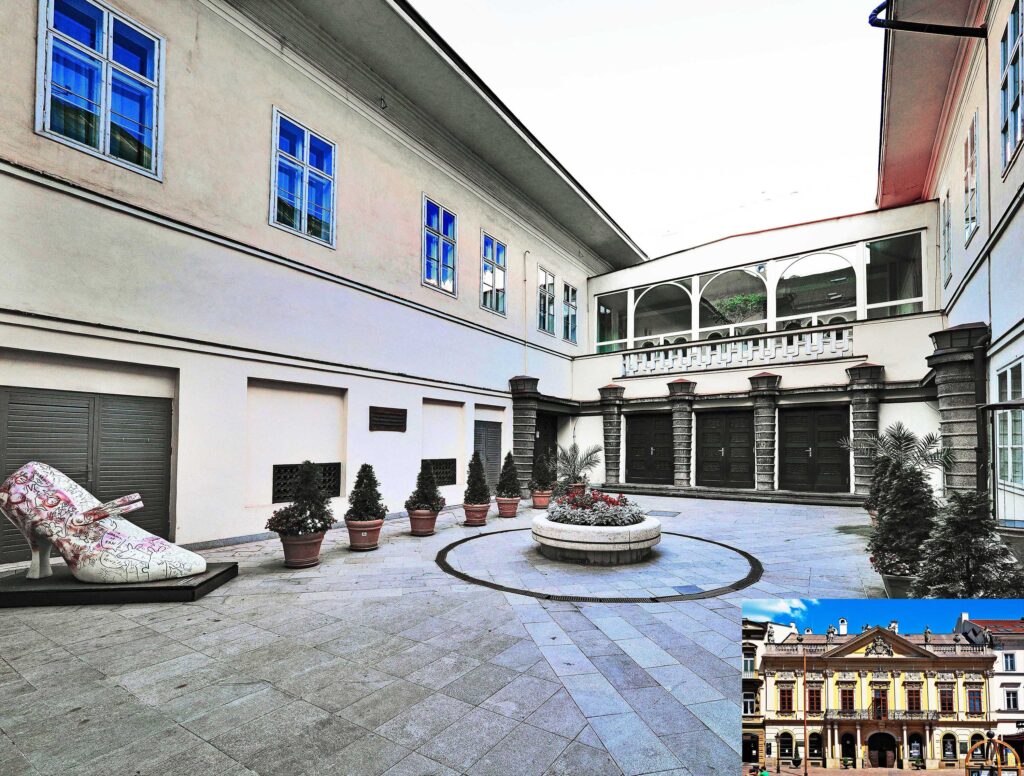
The Courtyard of the Old Town Hall
Location:
Hlavná Street 59, Košice
The architect Ludovít (Ludwig) Oelschläger, alias Lajos Őry, had mixed Hungarian and German blood and was of the typical mentality of a Košice citizen at that time. He was born in Košice in 1896, his classical education and good family background were provided by a wealthy evangelical German family from Košice, originally from Spiš. At the time of Oelschläger’s birth Košice was the part of the Austro-Hungarian monarchy. The intellectual and spiritual atmosphere in Košice at that time was close to Budapest. Oelschläger graduated from the Premonstratensian Gymnasium in Košice and in 1914 was admitted to the Hungarian Royal University of Technology of Nádor József – the so-called “Polytechnic” in Budapest.
However, he had to enlist as a soldier in the Austro-Hungarian and discontinued university. At the age of 19 he received the Silver Medal of Valour, which was a very high military decoration at that time. Oelschläger graduated from the University of Budapest after the end of the war, in 1921. The Hungarian Royal University of Technology in Budapest was the first school in Hungary to teach architecture at university level. It was a university with a traditional approach, educating practically orientated architects. The emphasis was more on engineering and design mastery and the students were guided towards a traditional conception of architecture. The studies provided Oelschläger with a adequate design foundation that made his later buildings solidly constructed, and the various architectural styles he designed only enriched them.
Having received his university diploma, Oelschläger undertook an extended study trip to Germany (1921 – 1922), which opened the door to European architecture. He stayed in Germany until 1923, where he worked in design offices in major German cities. At that time, the young architect also worked in the Bogdánfy and Gerlóczy architectural office in Budapest which was especially sought after by clients because of the architect Gerlóczy. The architect Gerlóczy had been imparted an excellent German university education at the University of Munich. While working in the Hungarian studio of Bogdánfy and Gerlóczy, Oelschläger won first prize in an architectural competition for the design of a business academy with dormitories in Mukachevo, which was the part of Czechoslovak Republic at that time.
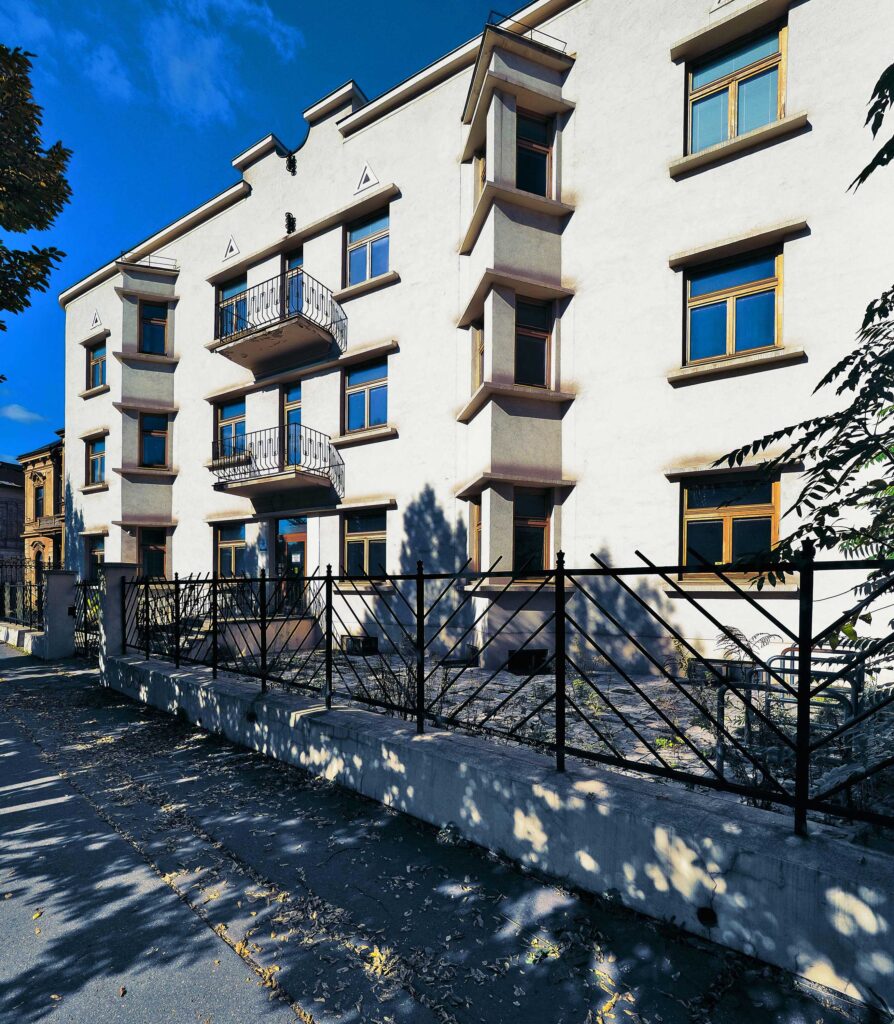
House of Ludovit Burger’s wife
Location:
Štúrova Street 21, Košice
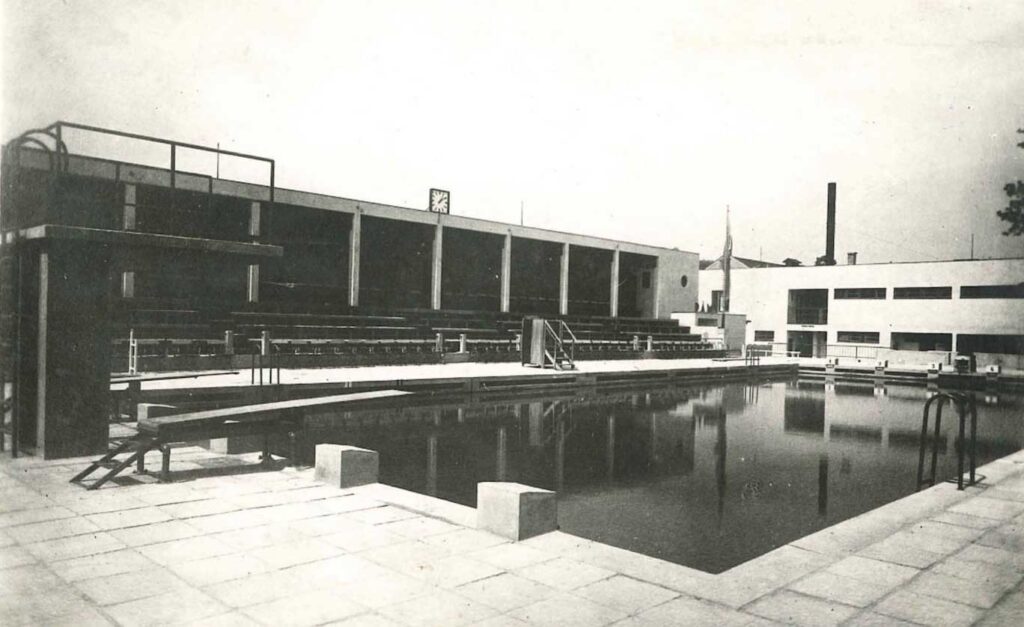
Summer Swimming Pool Červená hviezda
Location:
Staničné Squere 5A, Košice
In 1924 Oelschläger decided to return to his native Košice, where his period as a star architect began. According to architectural historians, the years 1923-1924 for this architect were a period of learning, searching and gradually developing his own architectural opinion.
Among Oelschläger’s first buildings in Košice, which can be admired by tourists even today, is the Fire Station at 2-4 Požiarnicka Street and was being built from 1927 until 1928. In 1927, the Orthodox Synagogue was completed along with the Sefer Torah Jewish School for Jewish boys at 3-5 Puškinova Street. These two buildings together formed an originally enclosed complex. In 1929, the construction of the Slovan Cinema, now the Historical Town Hall of Košice was completed in the courtyard at 59 Hlavna Street. Around the same time, the timeless House for Ludovít Burger’s wife was built at 21 Štúrova Street- The Chamber of Commerce and Industry, in so-called Moorish style, at the intersection of Main Street and Bačíkova Street in Košice was built in 1932 . This magnificent building also stands in the centre of the city and can still be admired by visitors to the metropolis of the East.
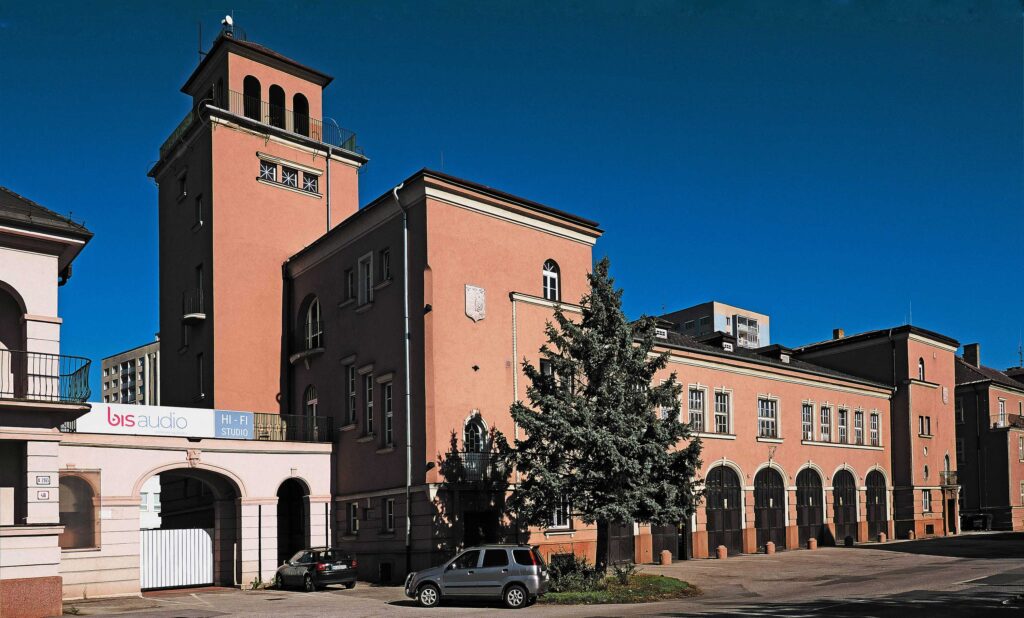
Building of Fire Station
Location:
Požiarnická Street 2-4, Košice

Orthox Sinagogue and School (the building of Head Office ŽSR at present)
Location: Puškinova Street 3 and 5, Košice
Just near the Main Station, on Staničné námestie 5A, there is the summer swimming pool Červená hviezda. Although it has been renovated, the main building in front of the large swimming pool, together with the pools and grounds was completed and finished by Oelschläger in 1936. Among his last buildings belonging to was the villa at 13 Rázusova Street in Košice which had been built before the Second World War.
Oelschläger was politically involved, as a member of the Hungarian bourgeois parties. After the questionable Munich Agreement Košice was annexed by Horthy’s Hungary in 1938. Miklós Horthy, the regent of the Kingdom of Hungary, personally presented Oelschläger with the Hungarian title of “vitéz” (hero) in Székesfehérvár in 1939. However, this title could only be awarded to citizens who had a Hungarian surname. This fact had beed probably the reason for the adoption of his new surname, Őry, which the architect used ever since. The alleged collaboration with Horthy probably contributed to Oelschläger’s emigration to Hungary with his entire family, including his older brothers Ferenc Őry and István Oelschläger, their father, after the Second World War. The father died in Miskolc in 1948. It was not until 1959 that the family of Lajos Őry finally moved to Miskolc. The architect jumped from job to job in socialist design organisations and worked until old age. He died in Miskolc in 1984.
“The information in this text is based on research by Doc.Ing. arch. Adriana Priatková, PhD.”
by Mgr. Daniela Capcarová, PhD.
photos by Bartolomej Cisár